NEWS
Cardoso: Naira Needs Competition, Not Protection


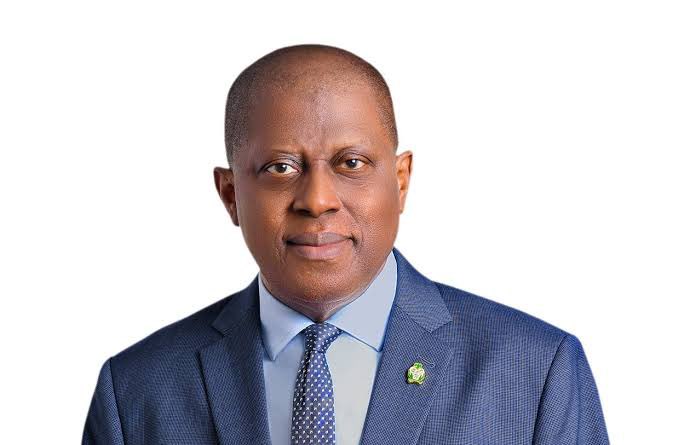
Governor of the Central Bank of Nigeria (CBN), Olayemi Cardoso, has stated that the naira must remain market-driven and competitive rather than being artificially supported.

His remarks came as the Monetary Policy Committee (MPC) retained the Monetary Policy Rate (MPR) and reaffirmed its commitment to reducing inflation to single digits despite mounting geopolitical risks.
Cardoso’s comments followed last month’s assessment by the International Monetary Fund (IMF), which said the naira remains significantly undervalued despite recent gains against the United States dollar in both the official and parallel foreign exchange markets.
According to the IMF, the naira is trading about 25.6 per cent below its value based on Nigeria’s economic fundamentals, even after the currency’s recovery following sweeping foreign exchange reforms introduced by the Federal Government.
Defending the CBN’s exchange-rate reforms while briefing journalists after the MPC meeting in Abuja on Tuesday, Cardoso said the apex bank remains committed to a transparent and liquid foreign exchange market driven by willing buyers and willing sellers.
“Our view is to continue on the path we have embarked upon by ensuring we have a market that is transparent, liquid and based on willing buyers and willing sellers.
“At the present level, the country needs a competitive currency. The naira’s value must be determined by economic fundamentals, including stronger oil and non-oil exports, increased foreign direct investment, improved domestic productivity and lower import dependence.
“We are comfortable that we now have a fully functional, open and transparent market. On some days, foreign exchange turnover exceeds $1 billion, showing that the market is responding positively to the reforms we have implemented,” Cardoso said.
Announcing the outcome of the MPC meeting, the CBN Governor said the committee retained the MPR at 26.5 per cent, maintained the asymmetric corridor at +50/-450 basis points, kept the Cash Reserve Ratio (CRR) at 45 per cent for deposit money banks and 16 per cent for merchant banks, retained the 75 per cent CRR on non-Treasury Single Account public sector deposits and left the liquidity ratio unchanged at 30 per cent.
He explained that the decision reflected a balance between signs of easing domestic inflation and growing uncertainty arising from renewed hostilities in the Middle East, which could push up global energy prices and worsen inflationary pressures.
Cardoso noted that headline inflation eased slightly to 15.91 per cent in June from 15.93 per cent in May, ending three consecutive months of increases. Core inflation also moderated to 15.92 per cent from 16.82 per cent, supported largely by exchange-rate stability. However, food inflation rose to 17.52 per cent due to supply constraints in key food-producing areas and high transportation costs.
“We are pleased that inflation has moderated, albeit slightly. That indicates that the measures we have implemented are beginning to yield results,” he said.
Although the Middle East conflict has slowed the pace of disinflation, Cardoso insisted that the CBN remains committed to restoring price stability.
“We will do whatever is necessary to contain inflation and bring it down to single digits, which remains our target,” he added.
The MPC projected that inflation would continue to moderate over the medium term, supported by exchange-rate stability, the delayed impact of previous monetary tightening and improved food supply during the harvest season. However, it warned that a prolonged escalation of the Middle East conflict remains the biggest risk to the outlook.
Cardoso also disclosed that Nigeria’s gross external reserves increased to $52.52 billion as of July 17, up from $50.47 billion at the end of May, providing about 11 months of import cover. He further noted that the Purchasing Managers’ Index (PMI) returned to expansion territory at 50.1 in June.
The CBN Governor stressed the need for stronger coordination between fiscal and monetary authorities to improve the effectiveness of efforts to curb inflation, maintain macroeconomic stability and support sustainable economic growth.
On bank lending, Cardoso said the recent decline is temporary and largely due to the withdrawal of COVID-19 regulatory forbearance, banks restructuring their loan portfolios and ongoing recapitalisation. He expressed confidence that lending would recover once the transition is completed.
He also reaffirmed that existing banknotes and coins remain legal tender, explaining that the limited circulation of lower denominations reflects declining demand as digital payments become more widespread.
“We have set ourselves an ambitious target to deepen financial inclusion over the next two years, and the CBN will continue to pursue that objective through its payments strategy,” Cardoso said.